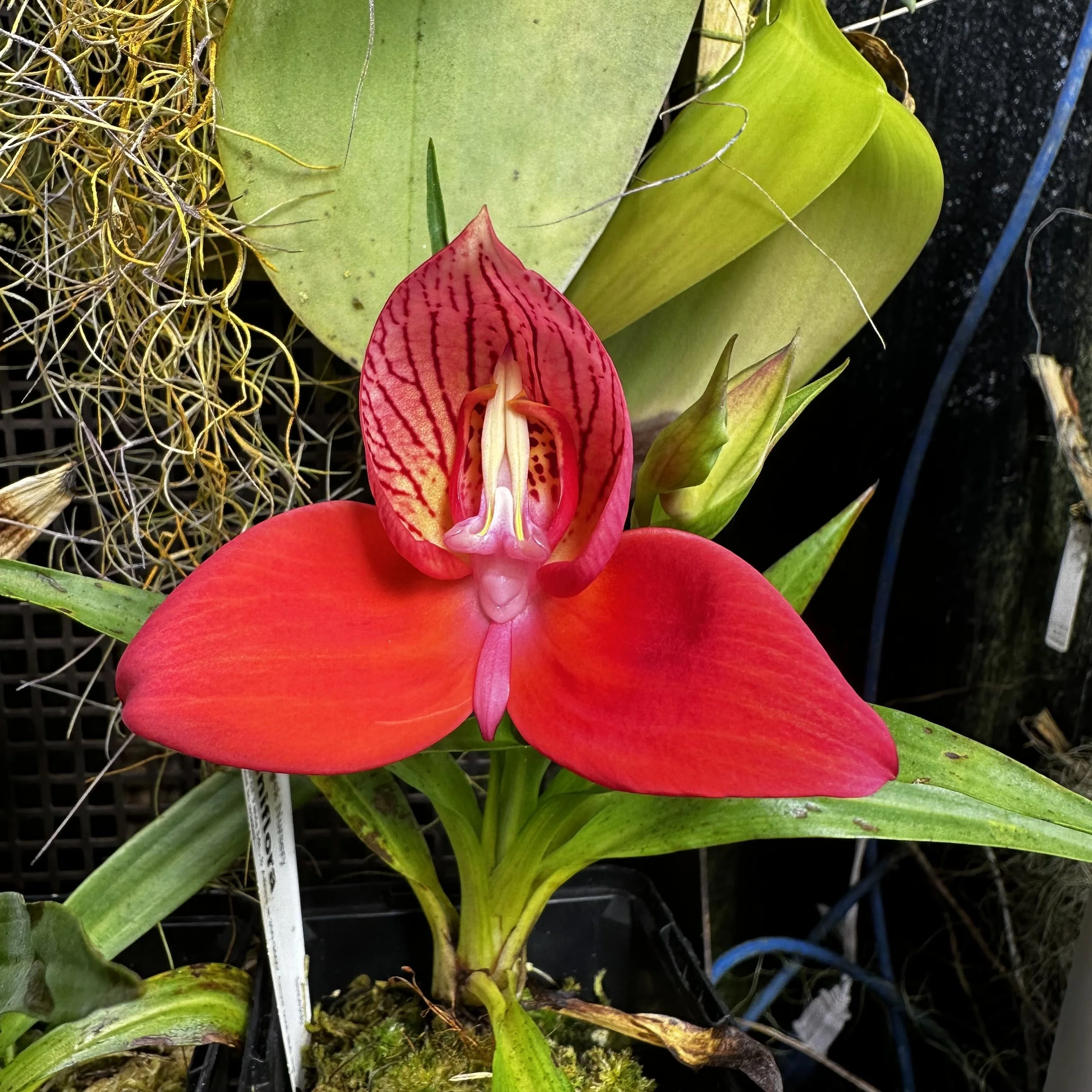
My Disa uniflora Set Up: Growing the Queen of Orchids at Home
Sharing My Journey with the Wisconsin Orchid Society
If you’re captivated by the brilliant red blooms of Disa uniflora—the renowned “Pride of Table Mountain”—but have been hesitant to try growing one yourself, you’re not alone. When I first set out to cultivate this South African beauty, I quickly realized that success requires a bit of a different approach than the more common orchids you’ll see at our Wisconsin Orchid Society meetings. Today, I’d like to share my set up and some tips that have helped me grow healthy, thriving Disa uniflora orchids right here in Wisconsin.
Understanding Disa uniflora’s Needs
Disa uniflora comes from the cool, fast-flowing streams of South Africa’s Western Cape. Unlike most tropical orchids, they crave cool, moist conditions, pure water, and excellent drainage. From the start, I knew that recreating these conditions would be essential for success.
My Growing Space
I grow my Disas indoors, dedicating one of my orchidariums where temperatures remain cool—ideally between 55°F and 70°F (13°C to 21°C). I use an aquarium canister filter/pump in conjunction with a water chiller. LED grow lights set to a 12- to 14-hour photoperiod. These lights provide the bright, indirect light that Disas love without overheating the plants.
Water Quality and Potting Mix
Water quality is critical! Because my tap water is a bit hard, I exclusively use rainwater or reverse osmosis (RO) water for both watering and misting. For the potting mix, I use a blend of fine sphagnum moss and perlite or perlite and peat, which maintains moisture but also allows for excellent drainage—a must for Disa roots.
Potting and Containers
I grow my Disas in slotted orchid pots, which sit in the water flow. I’m worried that the roots may be too contained and too wet for this to be optimal. I may have to switch to sphagnum and perlite in net pots to give them the exposure to the oxygenated water they’re supposed to love and allow them to breath like they do in South Africa where they are known to grow in seeps and along rivers.
Humidity and Air Circulation
To mimic the cool misty habitats Disas prefer, I keep the humidity between 60% and 80% using a ultrasonic humidifier on a controller. A gentle fan runs continuously to prevent stagnant air and discourage fungal issues. This combination of humidity and airflow will be critical in the health of the plants.
Feeding and Maintenance
I fertilize lightly, using a diluted orchid fertilizer (at one-quarter strength) every few weeks during active growth. After blooming, Any old growth is trimmed, which helps prevent rot and encourages new shoots.
Challenges and Rewards
Growing Disa uniflora hasn’t been without challenges. They’re sensitive to heat waves and don’t tolerate waterlogged roots. But with patience and attention to their unique requirements, I hope to enjoy spectacular blooms and the satisfaction of growing one of the world’s most stunning orchids.
Final Thoughts
If you’re interested in trying your hand at Disa uniflora, I encourage you to start small and pay close attention to their water and temperature needs. Don’t hesitate to reach out to fellow Wisconsin Orchid Society members for advice—we’re all learning together! With the right set up and a little persistence, you too can enjoy the brilliant display of Disa uniflora in your own collection.
Happy growing! Feel free to contact me or connect at our next meeting if you have questions.
John Stuckart